A First Matchday at an Unfamiliar Ground
A first matchday at an unfamiliar ground is easier with a clear meeting point, time to get your bearings and space to notice how the place works.
The common mistake on a first matchday at an unfamiliar ground is treating arrival as a dash from the station to the turnstile. It costs the chance to meet your group calmly, find the right side of the stadium and notice the small rituals that make the ground feel like itself.
Choose a meeting point that survives a crowd
“Outside the ground” is not a meeting point. It is a large area containing several entrances, food queues, stewards, and people trying to find someone who has sent the same message. Choose a named landmark that is easy to recognise and not directly in the busiest flow: a particular corner of the station concourse, a recognisable pub frontage, or a clearly marked plaza feature.
Agree on the exact side of the landmark, not just its name. If the group is arriving separately, say what happens when someone is delayed: wait at the agreed spot, send a message, or head to a second meeting point. Keep the fallback somewhere outside the turnstile queue, where people can pause without blocking others.
Say you are meeting two friends by the large clock at the station, but one train is late. You agree that the others will wait there until a stated point in the journey, then move to a café across the road and message the group. The expected result is a visible plan that does not depend on anyone searching the whole station forecourt.
Save the location in your phone, but keep the landmark description in the message too. Batteries and map pins have their own matchday traditions.
Give yourself time to learn the approach
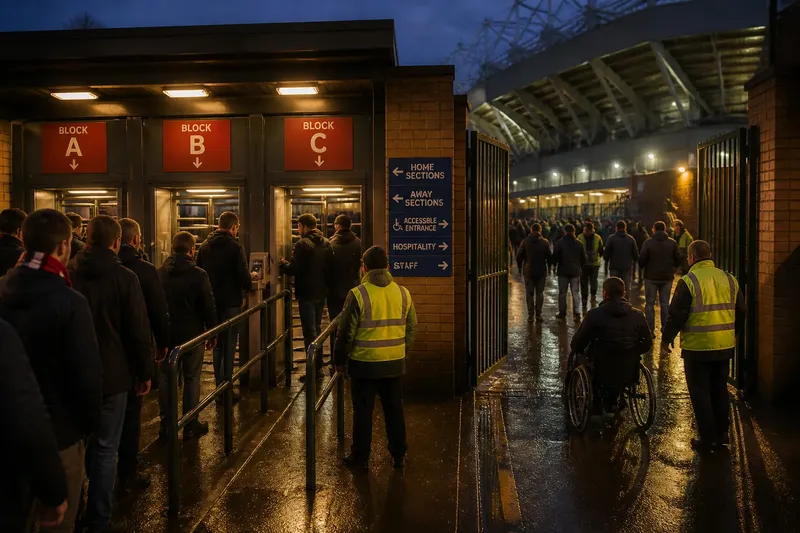
Check the club’s travel information and your ticket before setting off. Look for the stadium address, the entrance or turnstile printed on the ticket, public transport changes, and any advice about bags or restricted items. A ground may have several approaches, and the nearest-looking route on a map is not necessarily the one intended for your entrance.
Allow enough slack to walk from your arrival point, find the correct side of the ground and pause if a queue or diversion changes the plan. The aim is not to arrive absurdly early and study every paving stone. It is to avoid making the first view of the stadium a hurried search for a gate.
On arrival, read the signs before joining a line. Check the turnstile letters or numbers against the ticket, and watch how stewards direct supporters. If something is unclear, ask a steward rather than following the most confident-looking crowd; confidence is not an access-control system.
Orient yourself before settling in
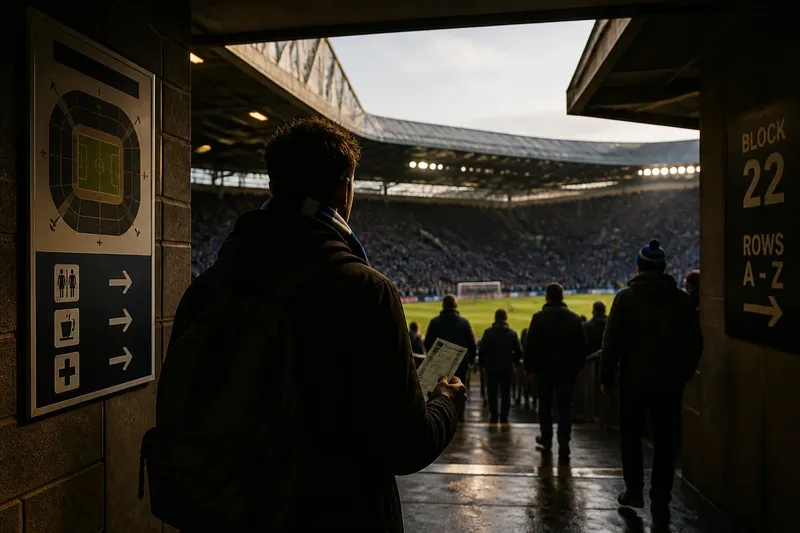
Once inside, take a moment to identify the practical landmarks: your section, the nearest concourse exit, toilets, food points and any help desk. Notice the signs that remain visible from where you are standing. If you need to leave your seat during the match, knowing the route back is more useful than remembering that the concourse looked vaguely familiar.
Keep your ticket or digital pass accessible, and check whether your seat is on a particular block, row or side of the stadium. On a first visit, similar-looking stairways can be remarkably persuasive. Follow the section labels rather than guessing from the shape of the stand.
Grounds differ in their rules on bags, food, re-entry and photography. Follow the ticket conditions and instructions from the club or venue; where these depend on local policy, the venue’s current guidance is the relevant source.
Leave a little room to observe the ground
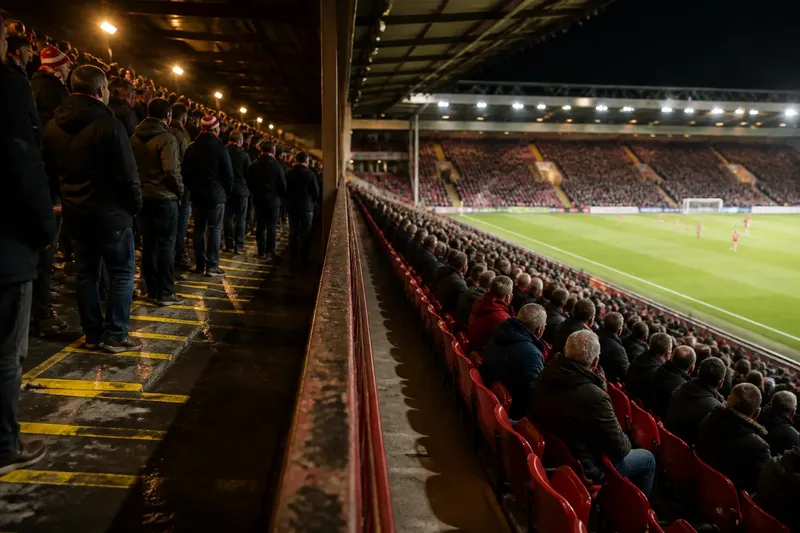
Do not schedule every minute between arrival and kick-off. Use a quiet stretch to notice how supporters move through the concourse, where people gather, and which sounds carry from one stand to another. A ground’s character often appears in ordinary details: a familiar song starting near one block, a particular route taken by families, or the way the crowd turns its attention before the players emerge.
This is not a request to stand in anyone’s way with a notebook. Keep to the edge of busy routes, follow steward instructions and let other people get on with their day. If a ritual is unfamiliar, watch first; joining in is a choice, not an entrance requirement.
Keep the phone away for a few minutes if the view allows it. You can still take a picture later, but the first impression of a roof’s echo or the crowd rising together is difficult to retrieve from a screen.
What should you check before leaving home?
Where is the entrance printed on the ticket?
Match the entrance or turnstile information to the stadium map and travel advice. Save the relevant details where you can reach them without searching through a long message thread.
Where will the group meet if arrivals differ?
Choose a recognisable spot away from the main queue and agree on a fallback. A precise landmark makes it easier to reunite without circling the stadium.
How much time should you allow?
Allow for the journey from your arrival point, the walk to your entrance and a short pause to orient yourself. Add room for a disruption rather than planning around the most optimistic route.
What should you do if the signs are unclear?
Stop somewhere that does not obstruct foot traffic and ask a steward or venue staff member. Guessing can send you towards the wrong entrance, while a brief question usually settles the matter.
Let the first visit stay manageable
A useful first-matchday plan is deliberately spare: know your entrance, choose a meeting point, carry the ticket details, and leave time to find your bearings. Do not try to reproduce someone else’s full routine before you know which parts suit you.
The first visit to an unfamiliar ground is easier when the practical decisions are settled before the crowd thickens. Once they are, you can give attention to the place itself: the approach, the concourse, the voices around you and the view opening up from your seat. That is where the ground stops being a pin on a map.